How to Respond to Negative Reviews: A Complete Guide
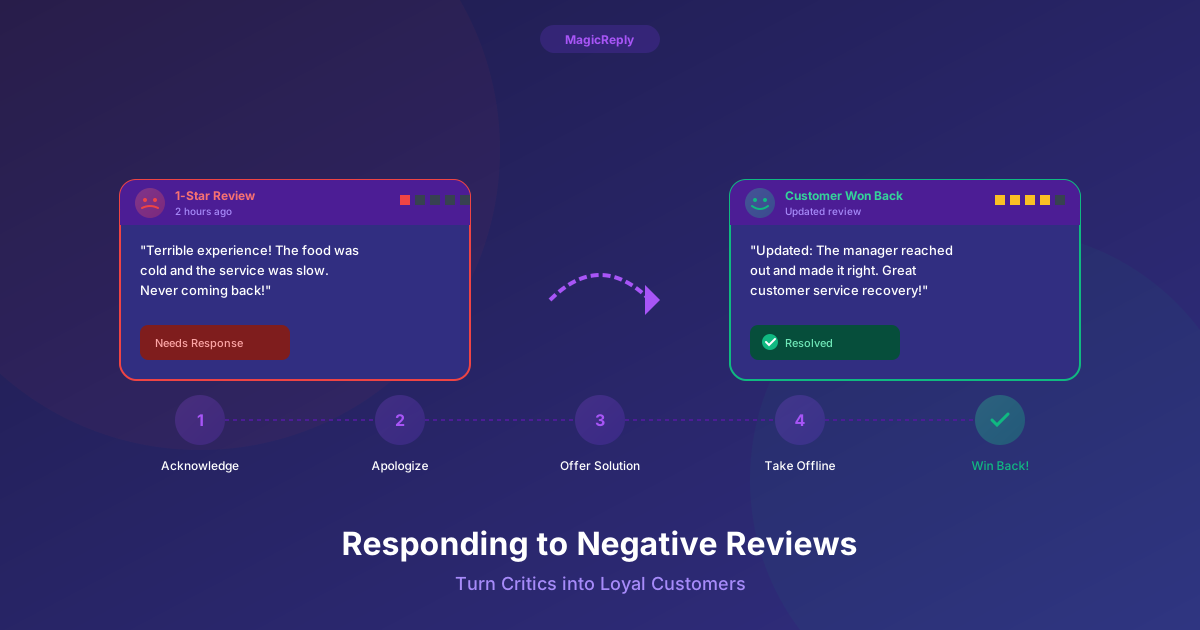
Negative reviews hurt. But how you respond to them can actually strengthen your business reputation. A professional reply shows future customers how you handle a problem.
We've analyzed thousands of real review responses across restaurants, auto shops, healthcare practices, hotels, and service businesses. Here's what separates the responses that recover customers from the ones that drive them away.
Why Negative Reviews Are Actually Valuable
Before we get into how to respond, let's reframe how you think about negative reviews:
- They're free quality assurance. A 1-star review about cold food tells you something your manager might not.
- They build trust when handled well. A thoughtful response to criticism impresses potential customers more than a wall of unchallenged 5-star reviews.
- They improve your SEO. Google rewards businesses that engage with all reviews — including negative ones.
- They prevent silent churn. For every customer who leaves a negative review, 26 others leave silently. The reviewer is doing you a favor.
The recovery paradox: Studies show that customers who have a negative experience resolved satisfactorily often become more loyal than those who never had a problem. This is your biggest opportunity — not your biggest threat.
The HEARD Framework
Use this proven framework for every negative review response:
H — Hear
Acknowledge their specific concern. Don't use a generic "we're sorry for your experience." Reference what actually happened.
❌ "We're sorry you had a bad experience."
✅ "We're sorry to hear that your meal arrived cold after a long wait — that's not acceptable."
E — Empathize
Show you understand the impact, not just the facts. A cold meal isn't just a quality issue — it ruined someone's dinner.
❌ "We apologize for the inconvenience."
✅ "We understand how frustrating that must have been, especially when you're looking forward to a good meal."
A — Apologize
Take responsibility even if the review feels unfair. Public reviews aren't the place to assign blame. You can investigate privately.
❌ "That's unusual, our food is normally excellent."
✅ "We sincerely apologize. This falls far below our standards."
R — Resolve
Offer a concrete next step. Move the conversation offline with a specific person to contact — not a generic inbox.
❌ "Please contact us if you'd like to discuss further."
✅ "Please reach out to our manager Alex directly at [phone] — we'd like to make this right."
D — Diagnose
Mention that you're investigating internally. This shows other readers that you don't just apologize — you actually fix things.
❌ (nothing)
✅ "We've shared your feedback with our team and are reviewing our process to prevent this."
5 Real Response Examples by Situation
1. Service Complaint
Review: "Waited forever, got the wrong order, and nobody seemed to care."
Response:
""We are very sorry for what sounds like a truly frustrating visit. Everything you described — the wait, the wrong order, and an unhelpful response — falls far below our standards. We've addressed this directly with our team. We would genuinely love the opportunity to make this right. Please reach out to [Name] at [phone/email]."
"— [Your Name], [Business Name]""
Why it works: Validates every specific complaint individually. Mentions the team has been addressed. Offers a named contact.
2. Quality or Product Issue
Review: "The food was dry and cold. Honestly not worth the price."
Response:
""Thank you for taking the time to share your feedback. We're sorry to hear that your meal didn't meet your expectations — we strive to provide high-quality food, and we regret that we fell short during your visit. We appreciate your input as it helps us improve, and we hope you'll consider giving us another chance."
"— [Your Name], [Business Name]""
Why it works: Doesn't argue about taste or quality. Acknowledges the shortfall. Focuses on improvement rather than excuses.
3. Pricing or Value Dispute
Review: "Way overpriced for what you get. Other places do it better for half the cost."
Response:
""Thank you for your feedback. We understand value is important, and we work hard to ensure the quality of our service justifies the investment. We're sorry we didn't meet your expectations on this visit. If you'd like to discuss your experience further, please don't hesitate to reach out — we genuinely want to hear what we could do better."
"— [Your Name], [Business Name]""
Why it works: Doesn't get defensive about pricing. Reframes as value without dismissing the concern. Opens the door for dialogue.
4. Rude or Unprofessional Staff
Review: "The owner was incredibly rude. Will never come back."
Response:
""We're sorry to hear about your experience and that our interaction left you feeling that way. That's not what we want anyone to walk away with. We take this feedback seriously and would appreciate the chance to understand what happened. Please contact us at [phone/email] — we want to address this."
"— [Your Name], [Business Name]""
Why it works: Doesn't get defensive (even when it's personal). Shows willingness to listen. Moves it offline where a real conversation can happen.
5. Health, Safety, or Cleanliness Concern
Review: "Room was filthy when we checked in. Mold on the walls and a power cut at midnight."
Response:
""We're very sorry to hear about your experience — especially with something as important as cleanliness and basic comfort. What you describe is completely unacceptable and far below the standard we hold ourselves to. We can only imagine how stressful it must have been. We've reported this to our maintenance and housekeeping teams for immediate attention. Please contact us at [email/phone] so we can discuss a resolution."
"E - Empathize: Show you understand their frustration"
"— [Your Name], [Hotel/Business Name]""
Why it works: Takes full ownership. Shows empathy for the impact (stress, disruption), not just the issue (dirty room). Describes internal action taken.
What NOT to Do
These mistakes turn a bad situation into a worse one:
❌ Never argue in public
Even if the review is unfair, every potential customer is reading your response. Win the audience, not the argument.
❌ Never copy-paste the same response
Identical responses to different complaints signal that you don't actually read reviews. Each response must reference something specific from that review.
❌ Never ignore negative reviews
An unanswered 1-star review looks like an admission. Silence is louder than any response.
❌ Never blame the customer
Even if they're wrong. "That's not how it happened" or "You should have told us at the time" makes you look adversarial.
❌ Never reveal private information
This is especially critical for healthcare, but applies everywhere. Don't share details the customer didn't make public. Respond to what they said, not what you know.
❌ Never respond when emotional
If a review makes you angry, wait an hour before writing. Your cooled-down self will write a much better response than your frustrated self.
Industry-Specific Considerations
🏥 Healthcare
- Keep responses extremely brief — 2-3 sentences maximum
- Never reference treatments, diagnoses, or appointment details
- Move everything offline immediately: "Please contact our office directly at [phone]"
- Sign off formally: "Best Regards, [Doctor/Practice Name]"
🍕 Restaurants
- Address the specific food item if they mentioned one
- Explain policies briefly when relevant ("We operate first-come, first-served and tables may appear open but are reserved")
- Offer to have them back — restaurants thrive on second chances
🔧 Auto & Service Businesses
- Be direct and concise — these customers value efficiency
- Always offer a phone number (not just email) — auto customers prefer calling
- Sign with your first name — trust is personal in this industry
🏨 Hotels & Hospitality
- Show empathy for how it affected their trip, not just the issue
- Take full responsibility — never minimize a guest's experience
- For multi-location brands, ensure consistent voice across properties
The Speed Factor
How quickly you respond to negative reviews matters enormously:
- Responding within 24 hours shows you're actively monitoring
- Responding within 1 hour makes the reviewer feel truly heard
- Waiting more than a week signals you don't care
- Never responding is the worst option of all
A fast, professional reply shows the reviewer — and everyone reading later — that you take the problem seriously. Speed communicates care.
Stop Dreading Negative Reviews
The businesses that handle negative reviews best don't write every response from scratch. They use AI to generate a thoughtful first draft — one that references the specific complaint, matches their brand voice, and follows the HEARD framework — then review and post it in seconds.
MagicReply reads each review's content, sentiment, and context, then generates a response that sounds like you wrote it. Even for the 1-star reviews you'd rather avoid.
Try a reply before you sign up
Paste a Google review and get a free AI draft. No account needed.